
Find Lower Prices
Energy suppliers set different rates. By comparing quotes, you're more likely to find a cheaper tariff — sometimes significantly cheaper than what you're currently paying.
Comparing business energy quotes is important because it helps your company save money, manage risk, and choose the best deal for its needs.

Energy suppliers set different rates. By comparing quotes, you're more likely to find a cheaper tariff — sometimes significantly cheaper than what you're currently paying.

This clarity helps prevent surprises on your bills.

Energy prices can fluctuate due to market conditions. Comparing quotes allows you to lock in a competitive fixed price for your supply period, giving certainty for budgeting.

Many business energy contracts auto-renew if you don't act before the end date — often at higher rates. Comparing ahead of time helps you find a better renewal deal.

Peak usage times, renewable energy goals, and multi-site needs are important factors to consider when matching your energy consumption profile.

Some suppliers offer perks — like free energy audits, carbon reporting tools, or demand management services — that aren’t obvious unless you compare options side-by-side.

Lower energy costs mean lower operating costs, which can improve competitiveness — especially in sectors where margins are tight. In short, comparing business energy quotes saves money, reduces risk, and helps you choose the contract that fits your business best.
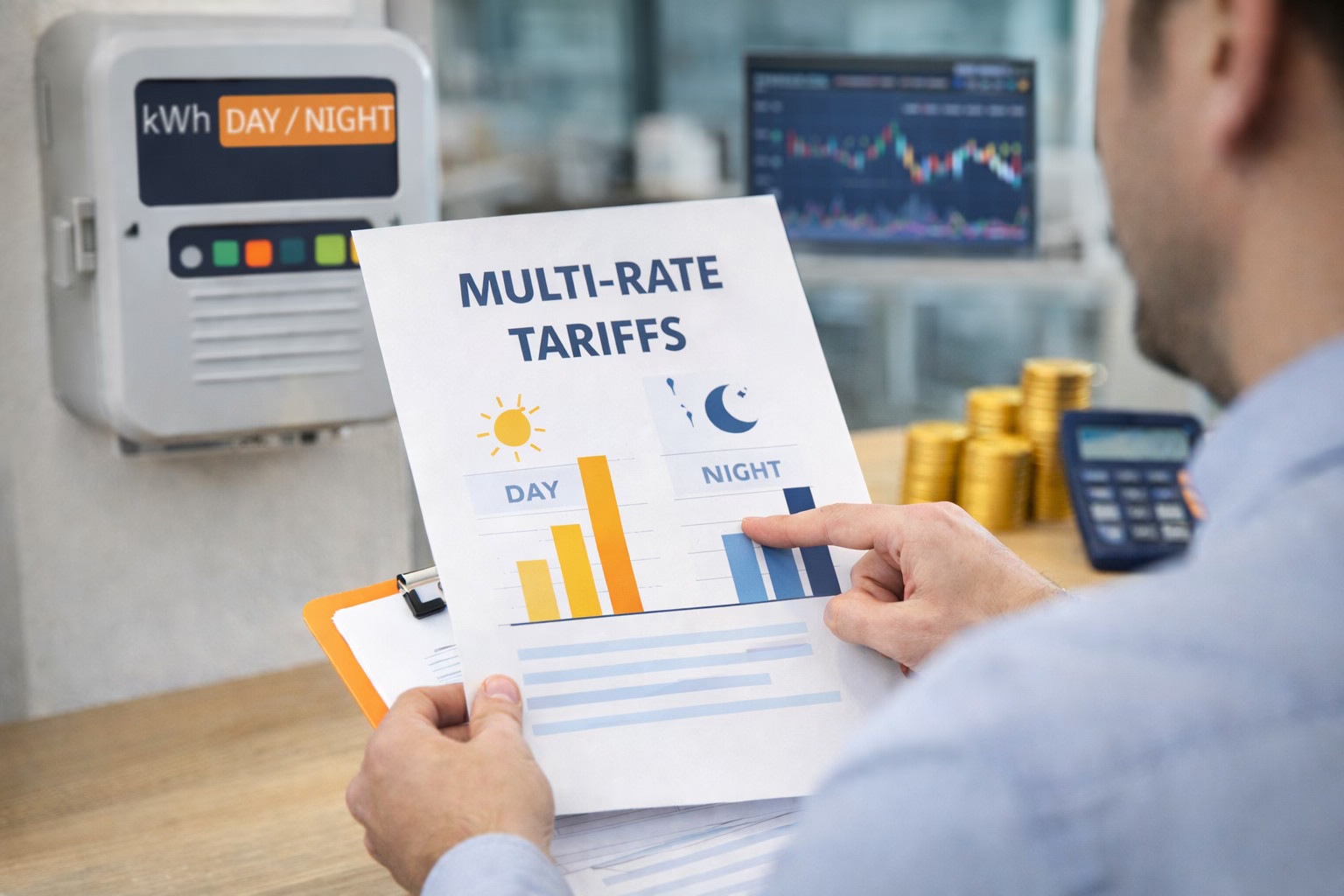
You pay a fixed price per unit (kWh) for the duration of the agreement (often 1–5 years). Great for budget certainty and planning cash flow. You’re protected from market price rises, but can’t benefit if prices fall. Standard choice for many small and medium businesses.

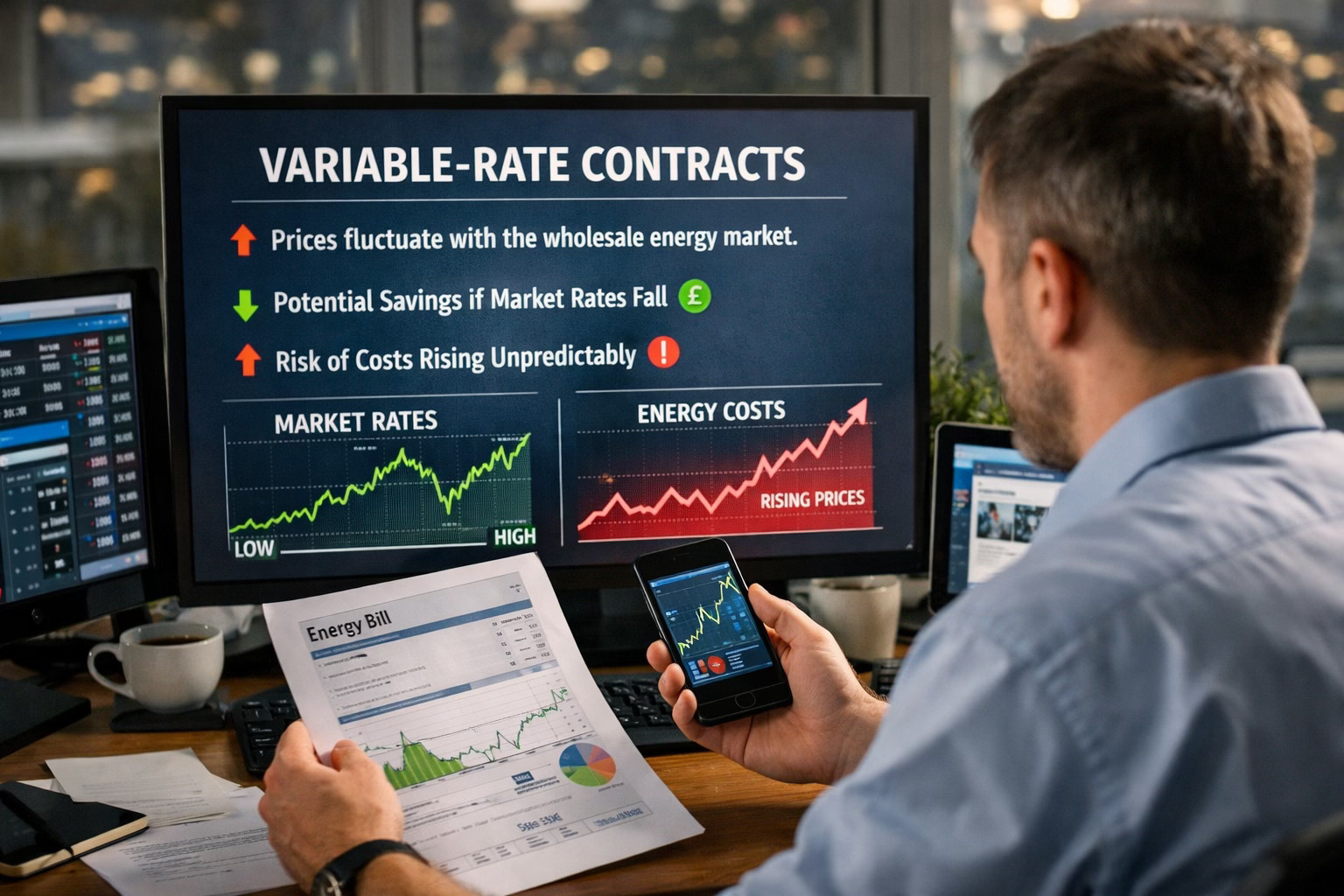
Prices move with the wholesale energy market throughout the contract. You might save if market rates fall, but costs can also increase unpredictably. This can suit businesses that want flexibility and are comfortable with risk.
Allows businesses (typically larger users) to buy energy in blocks or at different times — e.g., quarterly — instead of all at once. Helps spread risk and potentially capture better prices than a single fixed deal. Often involves online tools and more active management.
There’s no one “best” energy contract for every business — the right choice depends on your size, usage profile, risk tolerance, budgeting needs, and sustainability goals. Here’s how to match contract types to common business situations:
Best choice: Fixed-rate contracts
Best choice: Flexible or blended purchasing contracts
Best choice: Market-linked or wholesale contracts
Best choice: Green or renewable energy contracts
Deemed contracts / rollovers: Typically more expensive and lack competitive pricing. Out-of-contract rates: Applied when a contract expires, often at higher costs.
Quick Decision Guide
How predictable is your usage?
Stable → Fixed | Variable → Flexible / Variable
How important is budget certainty?
Very → Fixed | Some risk OK → Flexible / Strategic
Are sustainability goals a priority?
Yes → Green / Renewable
Are you a large energy user?
Yes → Strategic / Block purchasing
Comparing energy deals for your business doesn’t have to be complicated. By gathering a few key pieces of information, you can quickly find the best plan that suits your needs and saves you money. Here’s what you should have ready before starting your comparison:
Current Energy Supplier & Account Number: Knowing your supplier and account details ensures you can get accurate quotes.
Business Premises Address: Energy rates can vary by location, so your exact address is important.
Estimated Energy Usage: This helps compare tariffs that match your consumption patterns.
Latest Meter Readings: Provides a current snapshot of your usage for more precise estimates.
Contract End Date: Knowing when your current contract ends helps avoid early exit fees.
Business Type & Operating Hours: Some tariffs are better suited for businesses with specific energy demands.
Once you have these details, you can confidently compare rates, terms, and conditions to find the most cost-effective and suitable energy plan for your business.